BCNE Addresses “The Realities of Decreased Financial Support” by Selling Artisanal Coffee Through Its New England Gospel Collaborative
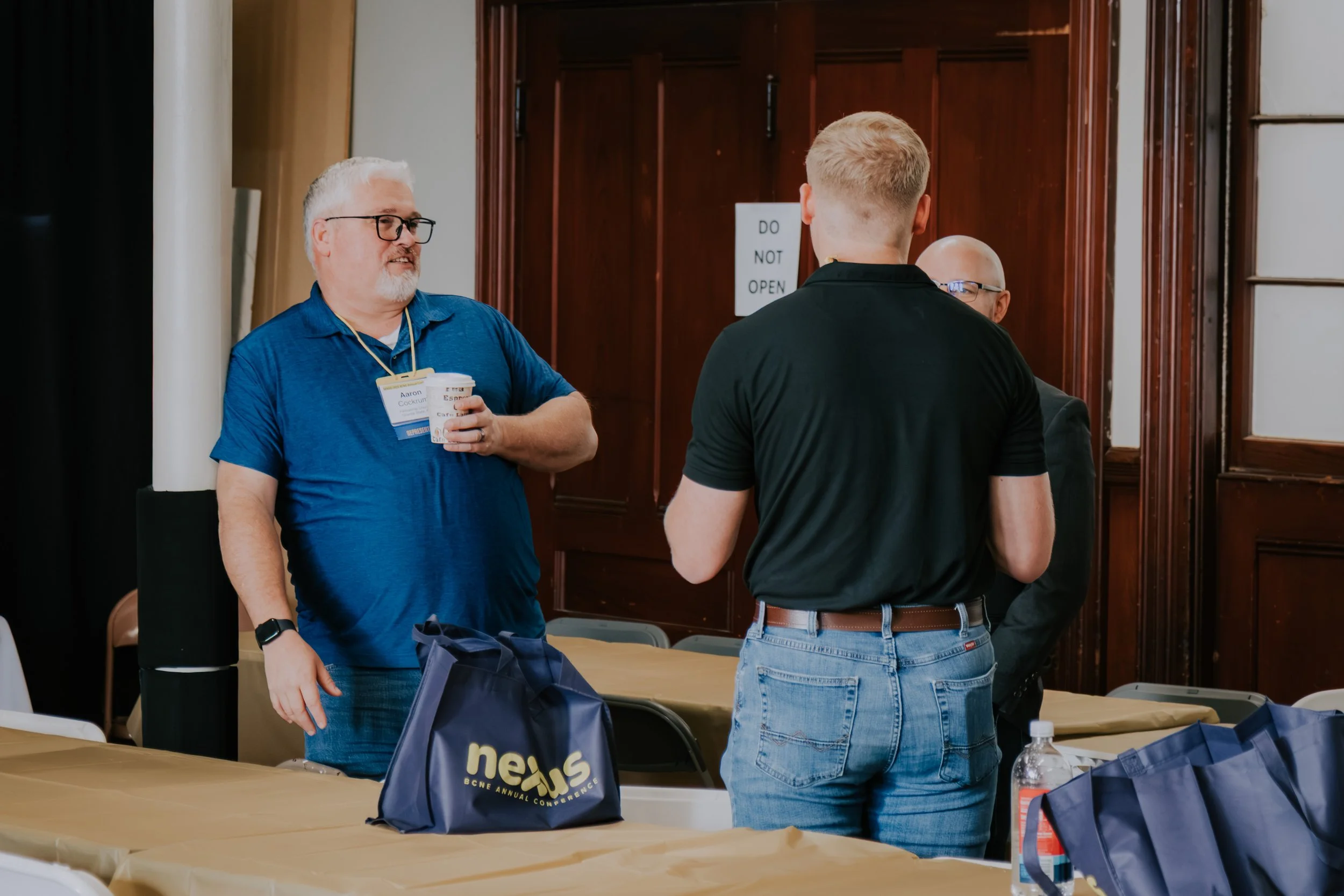
Attendees at the 2025 Nexus Conference enjoyed coffee provided by the New England Gospel Collaborative
Baptist Churches of New England (BCNE) launched an innovative strategy, the New England Gospel Collaborative (NEGC), which procured $1,700 in gross sales of artisanal coffee since November, funds that will be invested in the church network’s foundation and then be used for ministries.
Charlotte Mullane, who, at age 26, is the youngest BCNE Board of Directors member, has a passion for finding new coffee shops and having conversations over coffee. “I feel, generationally, coffee is very, very popular right now. I love visiting coffee shops around the world, and I think coffee somehow has a way of bringing people together.”
“I think developing something that is meeting a generational [interest], something that we enjoy, is very smart,” she said of the NEGC coffee marketing strategy. “Also, I just like locally sourced coffee,” added Mullane, who graduated from Worcester State University with a Public Health and Business Administration degree, with a focus on Global Studies courses.
Mullane, who is the Administrative Assistant and Partnership Director at Hope Chapel, Sterling, Massachusetts, wanted to thank Greg Fletcher, of Spotsylvania Courthouse, Virginia, who is the Church Partnership Facilitator in the Northeastern United States for Pioneers International. After he facilitated a Missions Committee meeting at the BCNE Multiplication Center to help better develop the Hope Chapel team’s vision and direction, “as God has been opening new doors for us with the recent expansion,” she recommended that they give him a six-month subscription to NEGC dark roast coffee “so, not only would he get really good coffee from a New England source, but it would also be a monthly reminder of our thankfulness for his partnership.”
Purchasing That Supports Ministry
“As America has moved into a post-denominational age, denominational entities, including the BCNE, are addressing the realities of decreased financial support from affiliated churches,” said BCNE Executive Director Terry Dorsett. “The numerous ways that address this reality,” he added, “include creating innovative strategies that provide additional avenues of financial support and raise the network’s visibility.”
“All Southern Baptist entities are struggling with the reality of declining Cooperative Program contributions from our churches. The BCNE decided to take preemptive action to address this issue instead of waiting for it to become a crisis. As I have studied fundraising trends over the last five years, this is not just a Southern Baptist trend. This is an issue that almost all nonprofits are dealing with,” he added.
“Younger generations are more likely to show their support for a cause by buying a product that is responsibly sourced and from which the profits accomplish something good, even if that item costs more. They do make outright donations, too, but those donations tend to be smaller because they are already using their everyday purchases as a way to support charity,” Dorsett commented.
“Recruiting supporters and donors has long been the lifeblood of successful nonprofits. Historically, Baby Boomers have been a driving force behind nonprofit support, contributing significantly through donations and volunteer work. But as millennials, Gen Z, and younger generations rise in influence, nonprofits must adapt their strategies to better engage these groups,” according to a February 2025 article, “How Nonprofits Can Engage Younger Generations.”
“Research on fundraising trends indicates that younger generations—specifically Millennials and Generation Z—often prefer to align their charitable giving with consumer behavior, such as purchasing products that support a cause, rather than relying solely on traditional, one-time monetary donations. . . . This demographic shift is driven by a desire for tangible, action-oriented impact and a preference for engaging with brands that share their values,” the author states.
Award-Winning Coffee With Missional Benefit
Beginning with Coffee by Design, a Portland-based artisanal roaster of “impeccably sourced” coffee, NEGC, the BCNE subsidiary, has been selling America’s favorite beverage. The “NEGC Blend,” which is the most popular choice so far, is described as a “classic blend of Central American and South American beans, a signature light roast. It offers a flavor that is both delicious and comforting, like sitting and relaxing in your favorite coffeehouse.”
The dark roast has “South American beans [that] are roasted to a deep, oily French roast and beans from Indonesia to a robust Italian roast. Lightly roasted African beans give the cup a final burst of thunder in each sip.”
NEGC coffee is sold for $22.50 a bag, which includes free one-week shipping. The coffee comes as dark or light roast, regular or decaffeinated, whole bean or already ground, in twelve-ounce bags; K-cups for Keurig machine users are not available. Individuals and churches may choose a subscription plan or make one-time purchases.
How could any coffee lover resist purchasing that sort of a morning brew—especially when it comes with a missional benefit? Every cup of NEGC coffee helps BCNE support pastors and ministry leaders, strengthen churches, and advance the gospel throughout New England.
Coffee drinkers “can now enhance their early-morning rituals, midday breaks, and evening routines with delicious coffee,” states the NEGC website.
The NEGC-BCNE “strategy has done very well in the first months. We’re still getting the word out about it. We’ve been doing some advertising and we’ve seen some definite success, but there’s a lot of room to grow in terms of raising money for mission support through the collaborative,” said BCNE Associate Executive Director Joshua Presley, who is leading NEGC.
NEGC’s “goal is to continue thinking through how we can have partnerships and more products that make a positive impact in the world while also providing funds for New England mission work,” he commented.
Presley, who knows of Coffee by Design (CBD) from his years as lead pastor of Lakeside Community Church, Waterboro, Maine, “did a lot of research on coffee roasters” before selecting Portland-based CBD, “a very highly rated coffee roaster that partnered with us at a price point that was able to allow a profit margin,” he added.
In fact, CBD was named the 2020 Macro Roaster of the Year by Roast magazine. The prestigious award recognized the company for its superior coffee quality, commitment to sustainability, and community involvement.
Founded in 1994, CBD is a woman-owned and operated business that is known for its ethical sourcing and high-quality artisan coffee. The Macro Roaster award is given to companies that roast over 100,000 pounds annually. At the time of the award, they were roasting approximately 650,000 pounds of coffee per year.
All Profits Return to BCNE
Since BCNE started selling its own brand of specialty coffee, about seventy-five bags of coffee have been sold, procuring $1,700 in gross sales for New England ministry; 100 percent of profit returns to the BCNE.
Last year, at the first annual NEXUS Conference, BCNE started marketing its coffee and this month the Administrative Committee approved NEGC as an ongoing BCNE subsidiary. Travel mugs for coffee and other products may be added to the collaborative’s product line.
The number of Americans who have enjoyed a cup of coffee increased by 37 percent since 2004, “putting past-day coffee consumption at its highest level in more than twenty years,” according to polling published in April 2024 in a National Coffee Association report. The trade association stated that 67 percent of American adults drank coffee in the past day, more than any other beverage, including tap or bottled water; this compared to 49 percent in 2004.
BCNE Sells Hats and Shirts
BCNE also seeks alternative funds for its ministry by selling a line of apparel complete with the BCNE name and logo. The available items, informally called “swag,” give the wearer “a stylish confidence, a cool demeanor, or a unique personal style,” according to the Urban Dictionary. Swag is defined as “promotional goods or items” by the more traditional Merriam-Webster dictionary’s third definition.
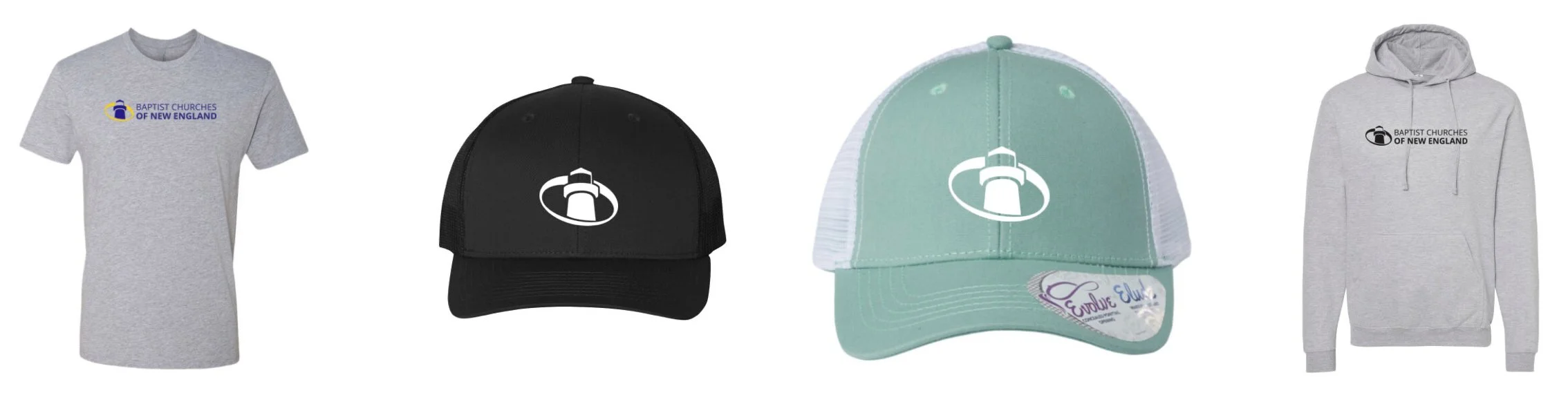
The BCNE website’s merchandise page sells a variety of apparel (called “Official Merch.”). The page lists short- and long-sleeve shirts, in several styles, in sizes that range from XS small to 4X large, in multiple colors, for women and men. The shirts are “100% combed ringspun cotton.”
A selection of sweatshirts and “trucker” caps is also marked for sale at a variety of prices. The BCNE receives 20 percent of profit from sales.
Your Design Here creates the BCNE apparel for the New England Gospel Collaborative and sells a selection of “brand-name apparel that’s primed for personalization.”
Changing Methods for Expressing Support
“It is sometimes hard for those who have supported charitable causes a certain way for a long time to grasp the need for change, but if we want younger generations to embrace those same causes, we need a variety of ways for them to express that support. The New England Gospel Collaborative provides those alternate channels,” Dorsett concluded.