
When History Becomes a Mission Field
Growing up, I was blessed to know my great-grandmother and her sister, both of whom were our family historians. From an early age, I heard stories about those who had gone before us—a father and son who served in the Civil War, an ancestor who fought at Ticonderoga during the French and Indian War and later served in the Revolutionary War, and generations of family history that I did not fully appreciate at the time.
My great-grandmother and her sister sometimes called me a "true son of Boston," a term connected to descendants of the Freemen who helped establish the Massachusetts Bay Colony. I knew it meant something about our family history. What I did not know was that decades later, God would use that history to open an unexpected door for ministry.
My calling is to be a pastor, but the Lord has also given me a deep love for history. For several years, I worked bi-vocationally as a teacher, including serving as a substitute history teacher in a local high school. Still, I never really saw how those two interests—ministry and history—might come together.
Then God opened a door I never expected. A few years ago, a retired teaching couple who had come alongside our church encouraged me to begin researching my family tree. I started with that Civil War father and son I had heard about as a child.
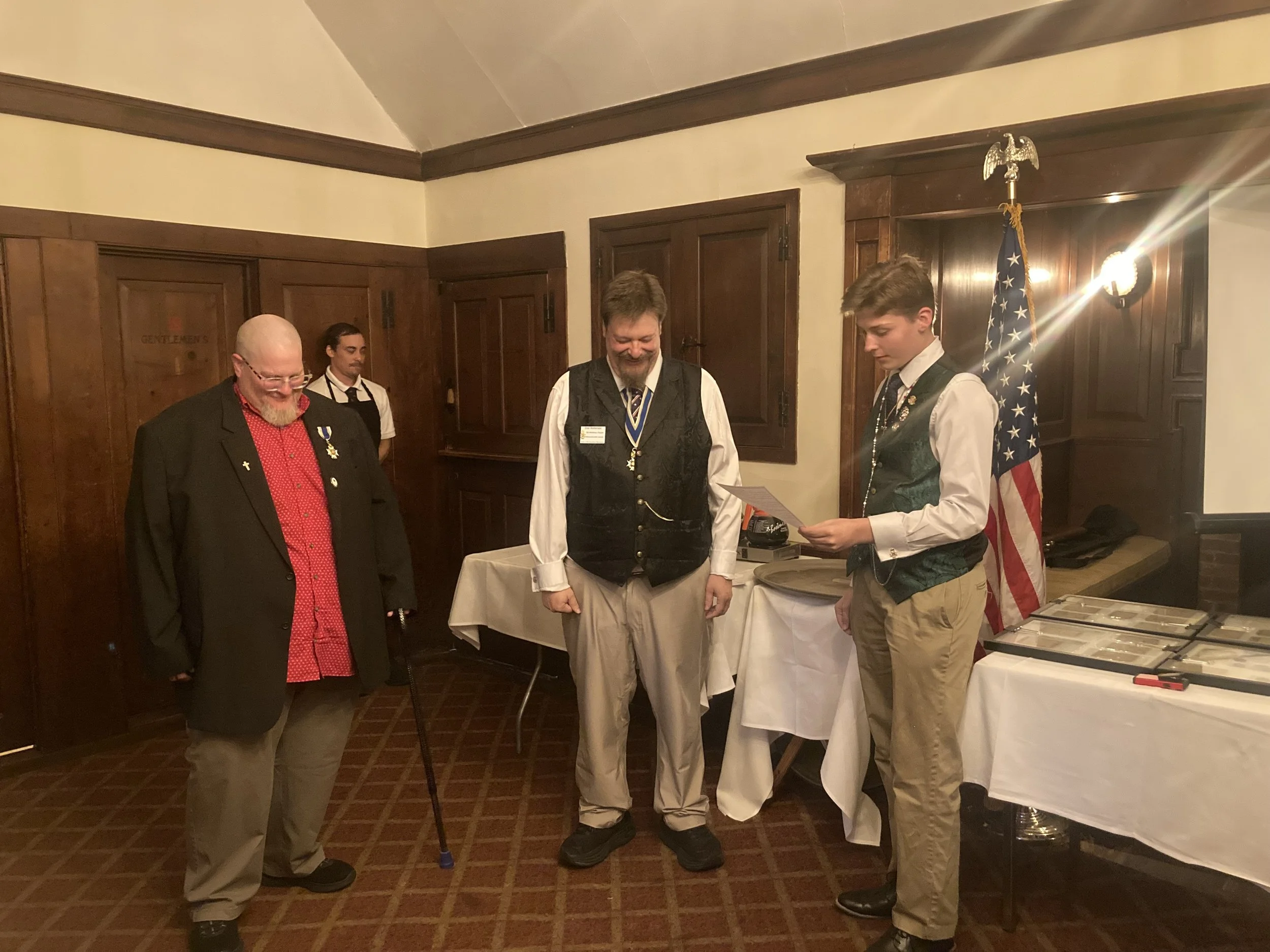
That research eventually led me to the Sons of Union Veterans of the Civil War (SUVCW), the federally recognized successor to the Grand Army of the Republic. More recently, as our nation marks its 250th anniversary, I was also inducted into the Sons of the American Revolution (SAR) and installed as chaplain of my chapter.
What began as an interest in my family history became an opportunity to serve. Through these organizations, I have been involved in cleaning graves, preserving memorials, documenting historical sites, and helping make sure that those who served our country are not forgotten. But some of the most meaningful moments have not been the work itself. They have been the conversations that happen while doing the work.
When you spend several hours with someone in a cemetery, surrounded by reminders of life and death, conversations sometimes turn toward eternity. That has happened to me more than once. I have sat with fellow members talking about life, death, faith, eternity, and what happens when this life is over. On one occasion, a fellow member shared his questions about Freemasonry and the idea, as he understood it, that "all paths lead to God." That opened the door for a conversation about what Scripture says about God, salvation, and the uniqueness of Christ.
Other opportunities have involved fellow Christians. Some have questions about their faith that they have never had anyone help them work through. Others simply need encouragement from another believer. I began to realize that these historical organizations were not simply places for me to pursue an interest.
They were a mission field.
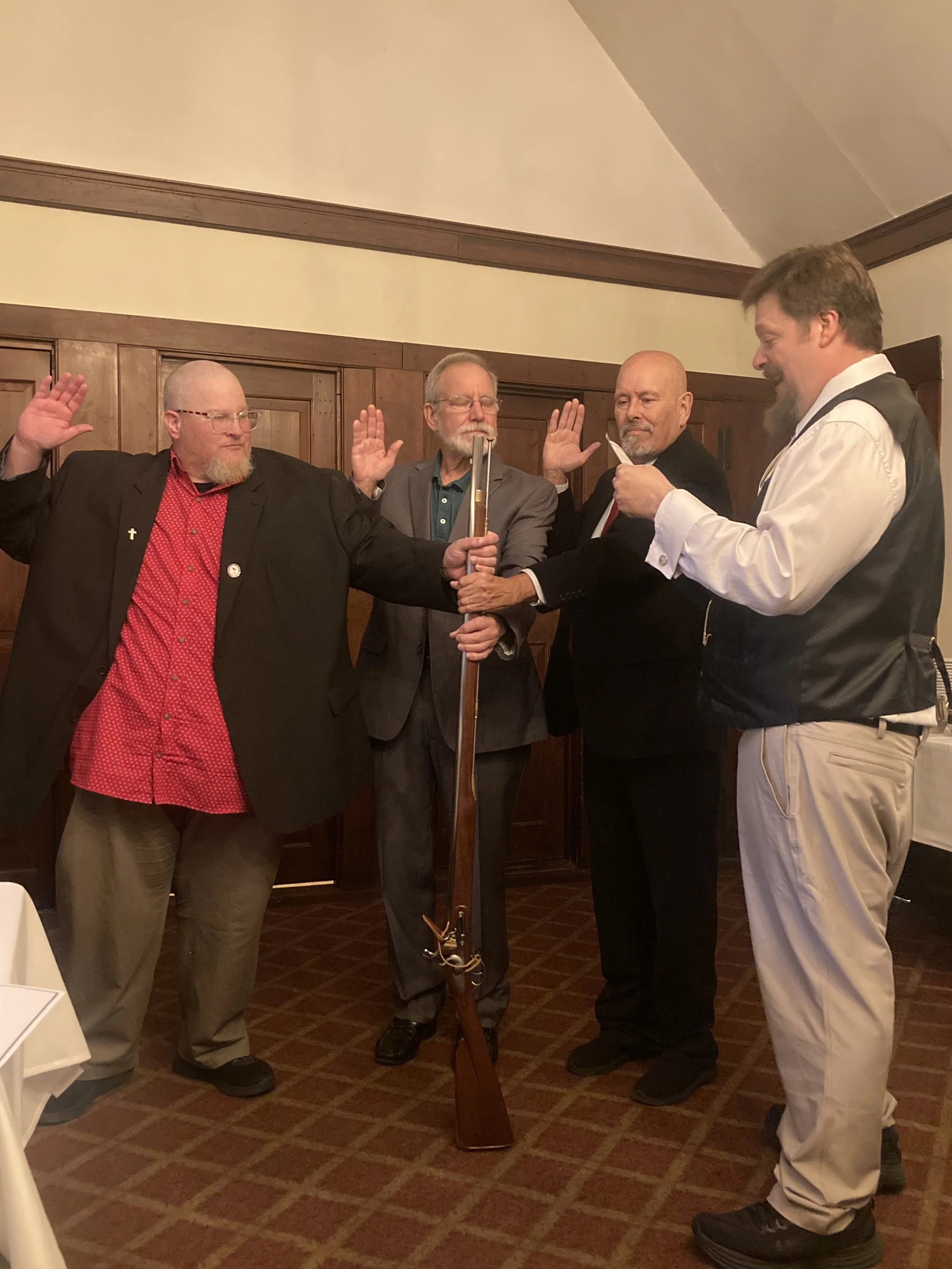
As a pastor and chaplain, I have opportunities to speak with people who may not know Christ, but I can also encourage and disciple Christians who are already there. Sometimes the door opens through a grave. Sometimes it opens through a family story, a ceremony, or a conversation about history. The important thing is recognizing the door when God opens it.
There is another interesting connection to all of this. I pastor what is believed to be the oldest continuously active Baptist church in Worcester County and the fourth oldest in Massachusetts. Our church was founded in September 1735—before the United States existed as a nation.
For years, I wondered why God had placed a history-loving pastor in a church with such a long history. Then, as I researched my own family, I discovered connections to people who helped establish communities, served their country, and even included ministers and founders of the town where I now pastor. Maybe God had been preparing me for this all along.
My growing involvement in local history has also led to opportunities to serve the broader community, including on our town's Historical Commission. And now some of those relationships may be creating new opportunities for our church.
This past Memorial Day, I was asked to give the invocation at a nearby cemetery. Afterward, I spoke with the commander of our local American Legion, who told me that our church had once held an annual Memorial Day service. That conversation stayed with me.
We are now exploring what it might look like to revive that tradition—not simply as a historical observance, but as a genuine community service of remembrance. We hope to involve groups such as the American Legion, SUVCW, SAR, and others who have a heart for remembering those who served and sacrificed.
But we also want remembrance to point beyond the grave. We can honor those who gave their lives in service to our country while sharing the hope we have because of the One who gave His life for us.
Memorials point us backward to remember. The Gospel points us forward to hope.
This entire experience has reminded me that ministry does not always look like a pastor standing behind a pulpit on Sunday morning. Preaching the Word is central to my calling, but God also uses His people wherever He places them. He does not waste our experiences, our vocations, our interests, or the places where He plants us.
For me, a simple interest in my own family history opened doors into cemeteries, memorials, historical organizations, community service, and relationships with people I might never have met otherwise.
I went looking for my ancestors. Instead, God gave me another place to serve people.
Perhaps there is a lesson in that for all of us. The people around us, the work we do, the interests God has given us, and even the experiences we think are unrelated to ministry may be some of the very tools He intends to use.
Sometimes the mission field is not somewhere we have to go find. Sometimes God has already planted us in it.