Prepare to Survive if an Active Shooter With a Deadly Weapon and a Lethal Intent Attacks Your Church Next Sunday

If your church finds itself the target of an intruder with a deadly weapon and a lethal intent, what should your pastor, leaders, and members do in the crisis moment to stay alive? And what training and strategies should you implement to prepare—as much as possible—to survive an attack that hopefully will never happen?
Adam Howe focused his comments on “surviving an active shooter event.” In an hour-long webinar, he gave practical “techniques, tools, tactics” and basic responses when someone is faced with an active shooter incident; these are “run, hide, fight.”
Adam Howe, a member of Island Pond Baptist Church, Hampstead, New Hampshire, answered those important questions and offered practical strategies for survival when he taught an online active shooter training seminar for the Baptist Churches of New England. The video may be found on the increasingly important BCNE Youtube channel.
He provided “some effective prevention methods—things that have worked in the past”—and spoke about “mentally preparing ourselves for the ‘what if.’ What if this were to happen to me? What am I going to do?”
He talked of mass shooting “events that our country has seen” and stressed that “we have seen success stories where people have survived . . . and lives were saved.” The “big takeaway is: these events are survivable.”
“Do everything you can to stay alive”
“If you can move, move to the best of your ability, and do not be a stationary target. More distance away from the attacker means less accuracy of the gunfire. When you create distance between yourself and the attacker, their rate of accuracy will go down significantly.”
“So, do not be within a close range of the attacker,” said Howe, a federal law enforcement officer, who leads his church’s security team and teaches in the children’s ministry. He urged those confronted by a shooter to “avoid a helpless and surrender mentality. Do not surrender to this person. Do everything you can to stay alive.”
A National Gun Violence Epidemic
According to the Gun Violence Database, there have been thirty-five incidents in April. Consider three newsworthy shootings from previous years that are nothing less than staggering.
On August 27, 2025, a gunman attacked children at a mass at Annunciation Catholic School and Church in Minneapolis. Children hid beneath pews, holding one another during the rampage that killed two children and injured at least twenty more.
On November 5, 2017, a deranged gunman shot and killed twenty-six people and wounded twenty-two others at First Baptist Church in Sutherland Springs, Texas. This reportedly was the deadliest shooting at an American place of worship.
On December 14, 2012, a gunman fatally shot twenty children and six adults at Sandy Hook Elementary School in Newtown, Connecticut. The incident is said to be the second deadliest school shooting in US history behind the Virginia Tech massacre in 2007.
“The path forward must not be prayer alone; it’s courage, community, and the conviction to save lives,” states the 2025 annual report of Brady United (formerly the Brady Campaign to Prevent Gun Violence and Handgun Control), a nonprofit dedicated to preventing gun violence through education, legal action, and policy reform. “In the wake of every mass shooting, our nation’s leaders offer up thoughts and prayers. But,” they ask, “what happens when children are shot as they pray?”
Representatives of Southern Baptist churches, meeting for an annual meeting in Dallas in 2018, passed a resolution that expressed grief, decried “the epidemic of gun violence resulting in mass shootings across America” and expressed “solidarity with all those victimized by gun violence.” The messengers, as church representatives are still called, also said they would “seek every available opportunity to minister” to gun victims. They affirmed that “gun ownership carries with it a great responsibility” and that “the greatest antidote to the pandemic of gun violence and mass shootings is the gospel of Jesus Christ.” The resolution mentions the shooting in Sutherland Springs, Texas.
“You have a right to defend yourself”
An “attacker has a plan when he enters a store, a building, a church, so we want to have a plan. Typically, the only two reasons an attacker is going to stop is that he accomplishes a goal [a killing], or he’s stopped before he can accomplish the goal,” Hοwe said.
First, create and train a security team. Island Pond Baptist Church has a security team. Church security teams can take many forms—but, generally, anybody and everybody: if you see something, say something, and do something about it.”
There’s no ‘one size fits all fix’ when it comes to church security. “You can’t sufficiently harden the building’s physical exterior. We’re not in an embassy overseas; we’re here in New England and our church buildings are our church buildings,” Howe noted. He urges churches to “lock down doors and have more sturdy locks on doors and windows. That stuff certainly helps, but it’s not a fix-all.”
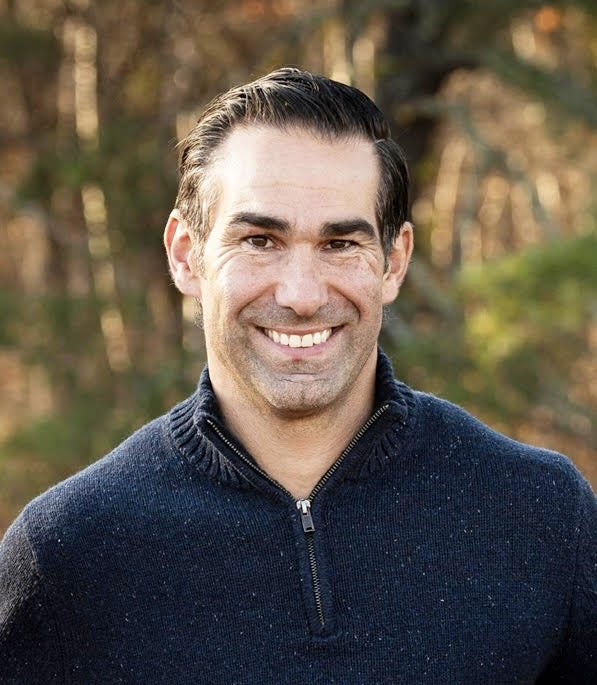
“The number one myth that I want to drive home is that nothing can be done,” said Adam Howe.
A Massachusetts native who moved to New Hampshire in 2015, he then mentioned some “myths” including that “locking down” a church building will block someone intent on entering. “That’s not necessarily true. We’ve seen active shooters shoot through a window or a glass door and enter that way, even though it is locked.”
“The number one myth that I want to drive home is that nothing can be done.” Some church leaders say, ‘We’re just not going to do anything and let what’s going to happen—happen.’ That is the number one myth: that we can’t do anything. They ask, ‘What can we do?’”
He then called on churches to be “more proactive” by preparing for what may never happen. He pointed out that the “average police response time [to a 911 call] in the United States is three minutes, depending on where you are,” but, he added, “three minutes, when there’s an active shooter event going on, can feel like three hours.”
“The actions we take in those first few minutes are going to save lives, especially if we go through [a] prevention and preparation process” that is clearly communicated to everyone, and then practiced.
Howe encourages leaders to invite police officers to visit the church facility, get acquainted by sharing coffee together, and ask police for advice on how to tailor a focused security plan. Every church needs to prepare and practice its active shooter plan for survival.
Elderly and disabled people, for example, ought to determine the best exit and sit near the door where a shooter would be least likely to enter the church. Special attention is needed for those in wheelchairs.
Those caring for the youngest church members also need their own plan of escape and clearly communicate that plan without frightening parents and children. Think about the issues ahead of time.
Everyone who joins with your church should understand the details of the church’s specific “run, hide, fight methodology,” Howe concluded. “Have a plan. Always have a plan! You have the right to defend yourself. At this point, somebody has entered your space, has shot either you or people you love. He’s trying to take lives. You have a right to defend yourself.”