Immigrant Churches Welcome Their Neighbors to Relationship-Focused World Cup Watch Parties
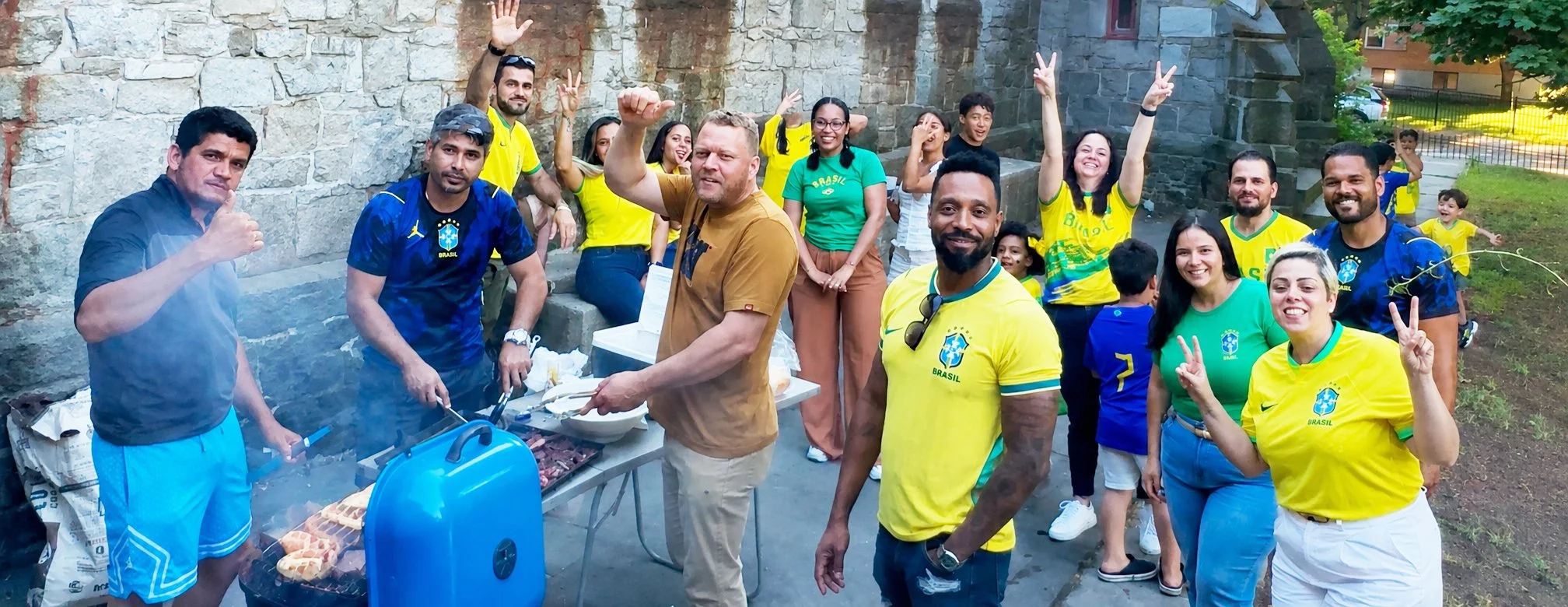
Several hundred immigrants in Greater Boston accepted invitations to watch parties held at or sponsored by immigrant churches.
With resale marketing and dynamic pricing for World Cup 2026 tickets skyrocketing, the best way to enjoy your favorite national team’s matches in the company of likeminded neighbors (in a safe and alcohol-free venue) has been to accept a neighbor’s invitation to a church-sponsored watch party.
Several hundred immigrants in Greater Boston accepted such invitations to at least ten watch parties held at or sponsored by immigrant churches that affiliate with the Baptist Churches of New England (BCNE). At least six Brazilian and four Haitian churches held unadvertised watch parties for World Cup matches.
“The immigrant churches aren’t really announcing big gatherings on social media like we did at the last World Cup when we had larger numbers,” commented Joe Souza, BCNE Associate Executive Director and Boston Area Regional Coordinator.
Watch parties held by immigrant churches counted smaller numbers than four years ago. “I’m attributing that to the whole immigration situation. I guess [churches are] scared of attracting ICE [US Immigration and Customs Enforcement] attention and people just don’t go to the larger gatherings anymore,” he added.
BCNE experienced “a larger number of smaller gatherings” in 2026, “instead of a smaller number of larger gatherings” in 2022. “That’s different from what we’ve done in the past. In the end, it’s going to be better because it allows for a lot more discussion between the church members and the guests. If you have 500 people coming to one event, it’s hard to do that. In most immigrant churches, the relationship, the hospitality, the conversation is far more important than someone filling out the contact card and turning it in,” said BCNE Executive Director Terry Dorsett.
“It’s not about the watch party, per se”
“In spite of the smaller numbers, we have been having some good reports so far. I have reports already from a Brazilian church that had probably 200 people,” Souza continued. Most Brazilian churches counted between forty and fifty people, he added, “but what was cool is that these smaller gatherings allowed them to be more laser focused on the visitors.”
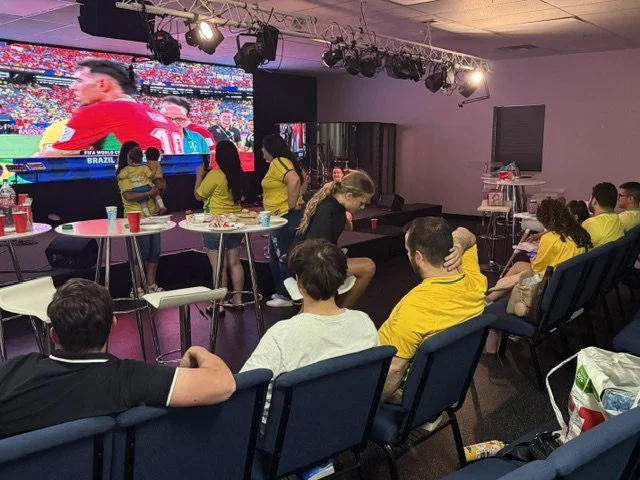
At least ten watch parties were held at or sponsored by immigrant churches that affiliate with the Baptist Churches of New England.
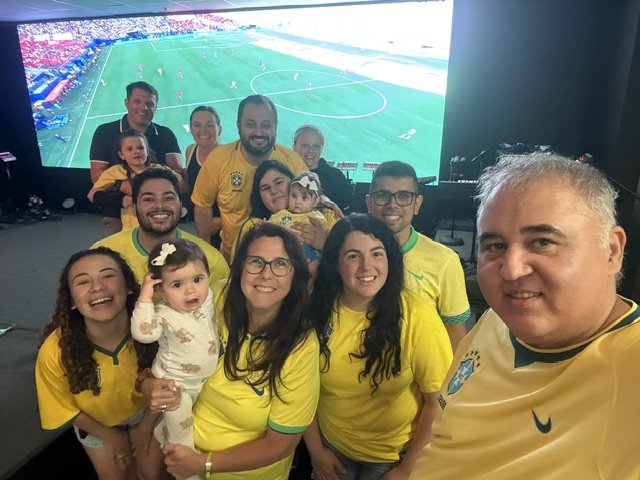
Joe Souza (right front) believes that the World Cup has “a deeper passion” for immigrants than the Olympics.” “It’s one sport and it’s everybody's main sport around the world. There’s national heritage and local culture being expressed and bringing people together to celebrate.
Antonio Luis Marques Ferreira, pastor of Lovely Church, Peabody, Massachusetts, held two televised football events for their neighbors.
Souza said the Brazilian pastor welcomed “five non-believers from different nationalities” who decided to attend a church-sponsored activity because of the “relationships” formed with neighbors. “It’s not about the watch party, per se, It’s about an evangelism opportunity—and it helped strengthen the church.”
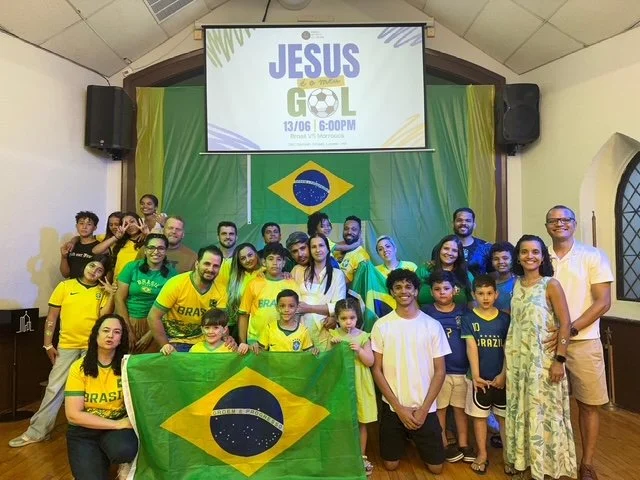
The best way to enjoy your favorite national team’s matches in the company of likeminded neighbors (in a safe and alcohol-free venue) has been to accept a neighbor’s invitation to a church-sponsored watch party.
Ferreira held a missions conference June 6, less than a week before the first World Cup 2026 match. Souza and Dorsett spoke about encouraging people to evangelize and reach their neighbors with the gospel. The visitors who showed up for the watch parties were invited by members—even when they were from a different nationality. “I see that as a huge win because, in past years, at least for Lovely Church, visitors were attracted by other Brazilians—only. This time around, the emphasis on personal invitations resulted in neighbors and colleagues” regardless of nationality,” Souza stated.
What is the importance of football to immigrants in New England? “Some call it football and others call it soccer but, around the world, the importance for immigrants is that it is the sport that they played back home—and it is in the World Cup now,” noted Souza.
Watching the World Cup with neighbors “is great because sport brings people together. This is a great occasion when families gather to watch the game and cheer for their countries. They wear the jerseys from their teams and they get to see world-quality players. It’s just a time to gather and celebrate.”
The associate executive director believes that the World Cup has “a deeper passion” for immigrants than the Olympics “because it’s one sport and it’s everybody's main sport around the world, there’s national heritage and local culture being expressed and bringing people together to celebrate. ”
An Increasingly Important Partnership
The World Cup watch parties were a cooperative project sponsored by Baptist Churches of New England, Send Relief, and Send Network Boston.
Tabernacle Baptist Congregation, a Haitian congregation located at 575 American Legion Highway in Boston’s Roslindale neighborhood, served about eighty people June 24 at their outdoor watch party.
The church is “the best example of partnership between BCNE and Send Relief/Send Boston. We pitched in together to provide finances and logistics for Tabernacle Baptist, which recently affiliated with BCNE, to do a successful outreach,” Souza stated.
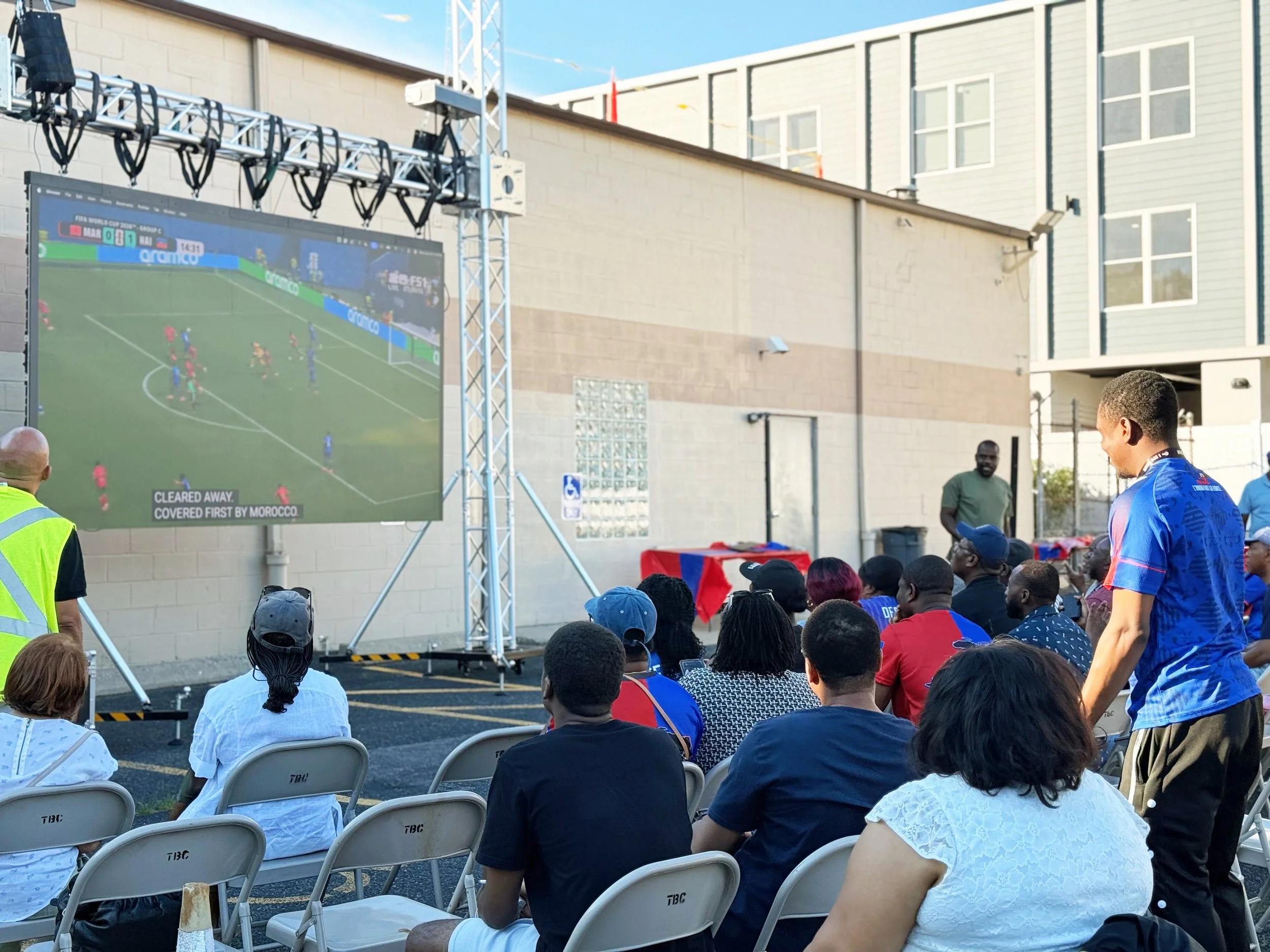
The increasingly important BCNE partnership with Send Relief and Send Boston provided funds for a Haitian congregation to rent an outdoor LED screen, serve food to their guests, and give attendees gifts including a “World Cup kit.”
The increasingly important partnership provided funds for the congregation to rent an outdoor LED screen, serve food to their guests, and give attendees gifts including a “World Cup kit” complete with a soccer ball, wrist bands, evangelism tracts, and more.
The BCNE partnership with Send Relief and Send Boston, said Souza, who is Brazilian, “is the new way moving forward in partnership between our organizations so that we can better serve our churches and seek unity in our endeavors to reach New England with the good news of the gospel.”
J. Abede Alexandre founded Tabernacle Baptist in 1997 and still serves as senior pastor. While serving in that role, he worked as a psychologist for the Boston Public Schools. He retired from BPS in 2018, after twenty-nine years to devote his life to full-time ministry. He is author of Marital Happiness Is a Choice: Following the Path to an Enjoyable Relationship with Your Spouse.
Most churches measure outreach success by attendance. What if the number of people at your event is the wrong metric entirely? In this conversation hosted by BCNE, Logan Loveday, Terry Dorsett, and Aaron Cockrum make the case for a shift in how churches think about outreach: less focus on events and more focus on genuine friendship.