
New England Churches Can “Move From Plateau to Vitality to Multiplication”
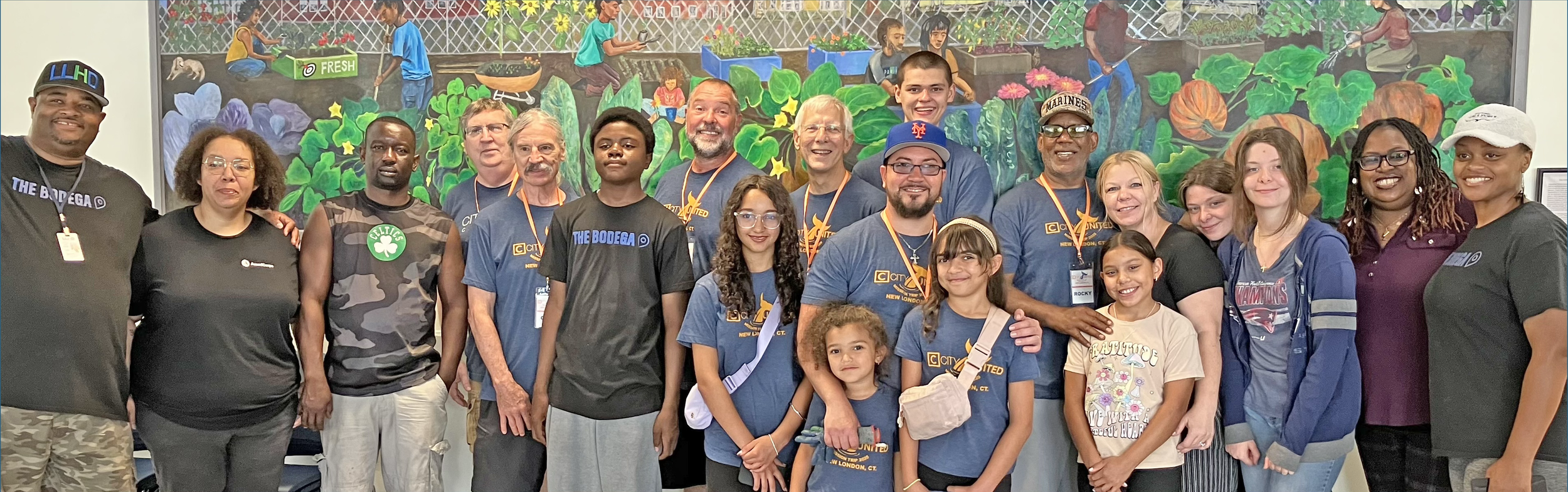
Members of City United Church, Lunenburg, MA, and members of On the Rock Community Church, New London, CT, have been replanting and revitalizing the Connecticut congregation.
The average church in New England has sixty people, a number that tells the story of our region. Small congregations are keeping the doors open, the lights on, and the gospel present in their communities. They are faithful, tired, and isolated.
A healthy sixty-person church with clear vision, strong systems, and multiplication DNA can plant effective, missional churches. That same sixty-person church stuck in decline cannot.
The difference isn’t size. The difference is vitality.
A sixty-person church can plant another church—size isn’t the issue. A church of sixty can plant another church effectively and with mission, but not if it’s dying and grasping for air. A congregation that is plateaued or declining can’t think about multiplication when it’s fighting for survival. The energy goes to keeping what exists, not creating what’s next.
Church Revitalization Matters for Gospel Multiplication
Church revitalization matters not just for the mother church but for the churches that will emerge from it. At City United Church in Lunenburg, Massachusetts, our team transformed a plateaued congregation into a vital, mission-focused church. Today, City United operates as a “Level 4 reproducing church,” tightening its vision around multiplication.
City United leads with open hands. We’ve helped multiple churches with resources, people, rebuilding efforts, funding, and by sending teams. When another congregation struggles, City United provides tangible support. We believe a simple truth: when a church thrives, we all win. This is multiplication DNA in action. What happened in Lunenburg can happen across New England.
The New England Reality
Just over 50% of churches in the BCNE are immigrant congregations navigating language barriers, cultural transitions, and resource limitations. New England is one of the most unchurched regions in America. The harvest is massive and the workers are few. The churches are small and many are plateaued or declining. Plateau doesn’t mean permanent.
Revitalization creates the health that enables missional church planting. It transforms plateaued congregations into reproducing churches. It takes dying ministries and breathes life back, not just for their sake, but for the churches that will come out of them.
Reading Suggestion:
“The Next Level: A Snapshot of Church Multiplication Trends”
by Scott McConnell, an Outreach magazine contributing editor, executive director of Lifeway Research.
Lifeway Research came alongside Exponential to survey 1,001 Protestant pastors for the “Becoming Five Multiplication Study.” The Becoming Five framework encourages every church to take steps to be reproducing and multiplying.
The five levels of “Becoming Five” capture where individual churches are in terms of their core context (Levels 1–3), their reproducing (Level 4), and multiplying of churches (Level 5). Every church is identified as either subtracting, plateauing or adding. While change in attendance is a key component, this starting position is modified to also incorporate offerings and spending changes, staffing level changes, the number of new commitments to Christ per attendee, opening new sites, and financially supporting church plants.
The 8 Cs Framework
BCNE Church Revitalization uses a proven framework:
Care — Pastors discover they are not alone. They have a family.
Context — Understanding the actual landscape of church and community.
Clarity — Defining vision, mission, and values with precision.
Culture — Fostering spiritual renewal and leadership health.
Capacity — Building systems that support sustainable growth.
Coaching — Providing guided accountability with measurable outcomes.
Courses — Equipping teams with shared language and framework.
Collaboration — Connecting churches in cohorts where revitalization multiplies.
Each phase builds on the previous one. The result? Churches move from plateau to vitality to multiplication. Churches plant with mission and effectiveness because they operate from health, not desperation.
Why This Matters for Church Planting
Revitalization isn’t just about saving dying churches. It’s about creating a “pre-pipeline” for effective church planting.
A plateaued church of sixty can send out fifteen people to plant, but if the mother church is grasping for air, what kind of church will those fifteen people create? A plant born from desperation inherits the same survival mentality. A plant born from vitality inherits multiplication DNA.
When churches sit at plateau and decline, someone has to realize that revitalization. That serves more than the current congregation. It serves the future network. It prepares the ground for the churches that will come out of that church.
Our church, City United, proves this. We received revitalization support and now we resource other churches. An investment in their health created capacity to multiply their impact across the region.
Churches Helping Churches
Churches are plateaued. Pastors are isolated. Communities need gospel presence. Future church plants need healthy mother churches.
Every revitalized church can collaborate with a church that needs vitality. Every congregation that moves from plateau to vitality is turning around to lift up another struggling ministry. Every healthy church planting is effective. Missional churches inherit multiplication DNA.
Revitalization offers struggling churches:

Jana and Gary Moritz
Care and coaching — Moving churches from plateau to health
Startup support — Launching new works that start healthy because they're planted by revitalized mother churches
Systems development — Building capacity that makes sustainable health and effective planting possible
Network resourcing — Enabling churches to help other churches with people, funding, and rebuilding efforts
A church that receives revitalization support from the BCNE becomes equipped to plant churches with mission and effectiveness. A pastor who gets coaching becomes capable of leading multiplication. An immigrant congregation that builds systems becomes a launching pad for ethnic church planting.
My wife, Jana, and I are so committed to the Baptist Churches of New England (BCNE) Church Revitalization that, in 2025, we gave the inaugural offering to start the Chair of Church Revitalization through the Baptist Foundation of New England.
Join us by making a commitment to
Church Revitalization in New England
We invite individuals to join us by investing online with the Baptist Foundation of New England through either the Chair of Church Revitalization or the Church Health Fund. The first fund provides a salary for a staff leader and the second fund underwrites an operating budget.
These endowed funds secure the future of BCNE Church Revitalization and fuel its next season of growth and impact.
